
Chores by age: what kids can actually do at 3, 5, 8, 11 and 14

Most chore charts fail for one of two reasons: the jobs are too hard ("clean your room" means nothing to a four-year-old) or insultingly easy (a twelve-year-old "putting their cup in the sink" is not a chore, it's table manners). Pitch the job right and most of the battle disappears.
Here's what's realistic at each stage. Every kid is different — treat the ages as the middle of a range, not a test they're failing.
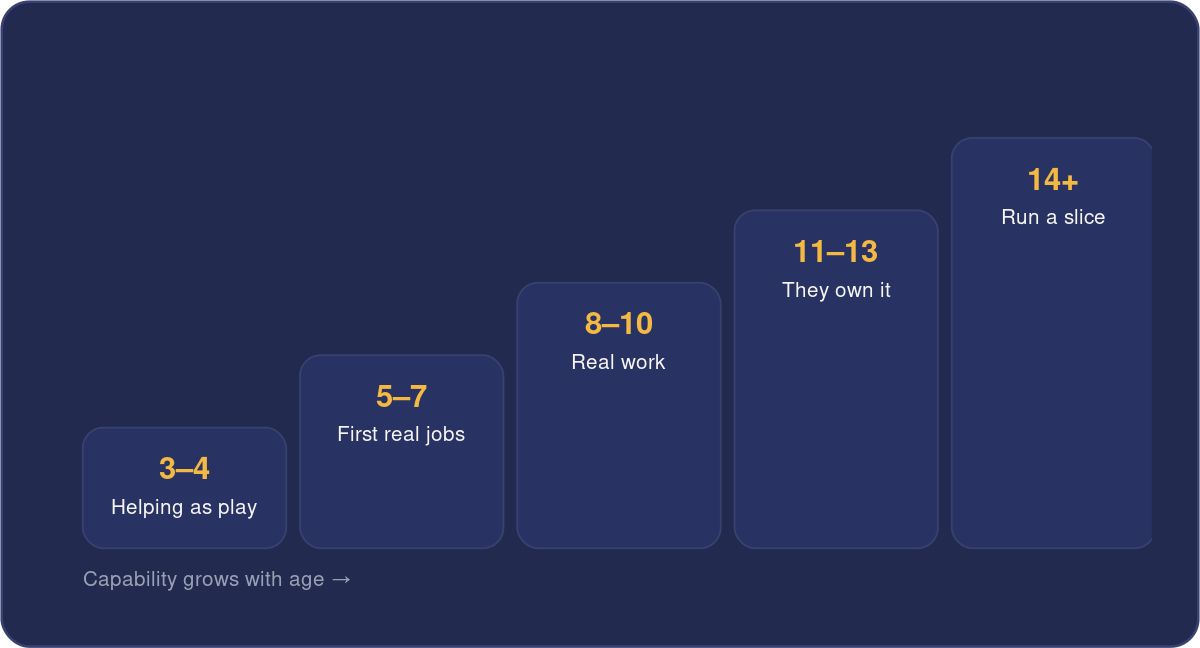
Around 3–4: chores as play
Toddlers genuinely want to help — the developmental window where helping feels like a privilege is real, and it closes. The goal at this age isn't useful output, it's building the identity of "someone who helps".
- Put toys into a labelled bin (one category, not "tidy the room")
- Put dirty clothes in the hamper
- Carry their plate to the bench (plastic, let's be honest)
- Help feed a pet — scooping with supervision
- Match socks from the clean washing
The trap: redoing it in front of them. If the socks are "wrong", leave them. The lesson is "my contribution counts", not "an adult will fix it".
Around 5–7: first real responsibilities
School-age kids can own a small job end-to-end — and this is the age where a visible system (a chart, or an app with their own profile) starts to matter, because the satisfaction of checking the thing off is half the motivation.
- Make their bed (your standard: duvet roughly flat, pillow on top)
- Set and clear the table
- Water plants, feed pets on a schedule
- Sort recycling, put shoes and bags away after school
- Simple food prep — buttering toast, washing fruit
The trap: vague jobs. "Tidy your room" fails; "books on the shelf, Lego in the tub, clothes in the hamper" works. Break it down until each piece is finishable in one go.
Around 8–10: the competence years
This is the sweet spot — old enough to do real work, young enough to still find points and badges exciting. Kids this age can handle multi-step jobs and a weekly rotation.
- Unload and load the dishwasher
- Vacuum a room properly (show them the edges once)
- Fold and put away their own washing
- Pack their own school bag and lunch the night before
- Take bins out, bring them in
- Basic cooking with supervision — scrambled eggs, pasta
The trap: inconsistency from the adults. At this age kids notice instantly when Tuesday's rule isn't Thursday's rule. Whatever system you run, run it every day.
Around 11–13: real workload, real stakes
Intermediate-age kids can do almost any household task to a decent standard. What changes is motivation: stickers stop working, autonomy and money start. Let them choose which jobs they own, and tie effort to things they care about — pocket money, screen time, saving toward something big.
- Cook one simple family meal a week
- Own their entire laundry cycle, wash to wardrobe
- Mow lawns / water the garden (judge your own kid and your own gear)
- Clean a bathroom properly
- Babysit a sibling for short stretches, if they're ready
The trap: paying for everything. Keep a base of unpaid "because you live here" jobs, and put real value on the genuinely effortful extras. (More on the paid-vs-unpaid evidence in this post.)
Around 14+: running pieces of the household
Teenagers shouldn't have a chore chart so much as a portfolio — areas they own outright. The win at this age is trust and independence: "dinner on Wednesdays is yours, we don't check up on you" lands better than any checklist.
- Weekly dinner, planned and cooked, start to finish
- Their own washing, room, and sports kit — no reminders, natural consequences
- Bigger one-offs negotiated like real work: water-blasting the deck, washing the car, clearing the garage
The trap: micromanaging the method. Agree the outcome and the deadline; let them pick how and when. That's the actual life skill.
Levelling up without a fight
Whatever the age, promotions beat impositions. "You've nailed feeding the cat for a month — want to take over the dishwasher? It's worth more" reframes new work as status. Kids will accept a harder job that feels earned far more readily than one that feels dumped on them.
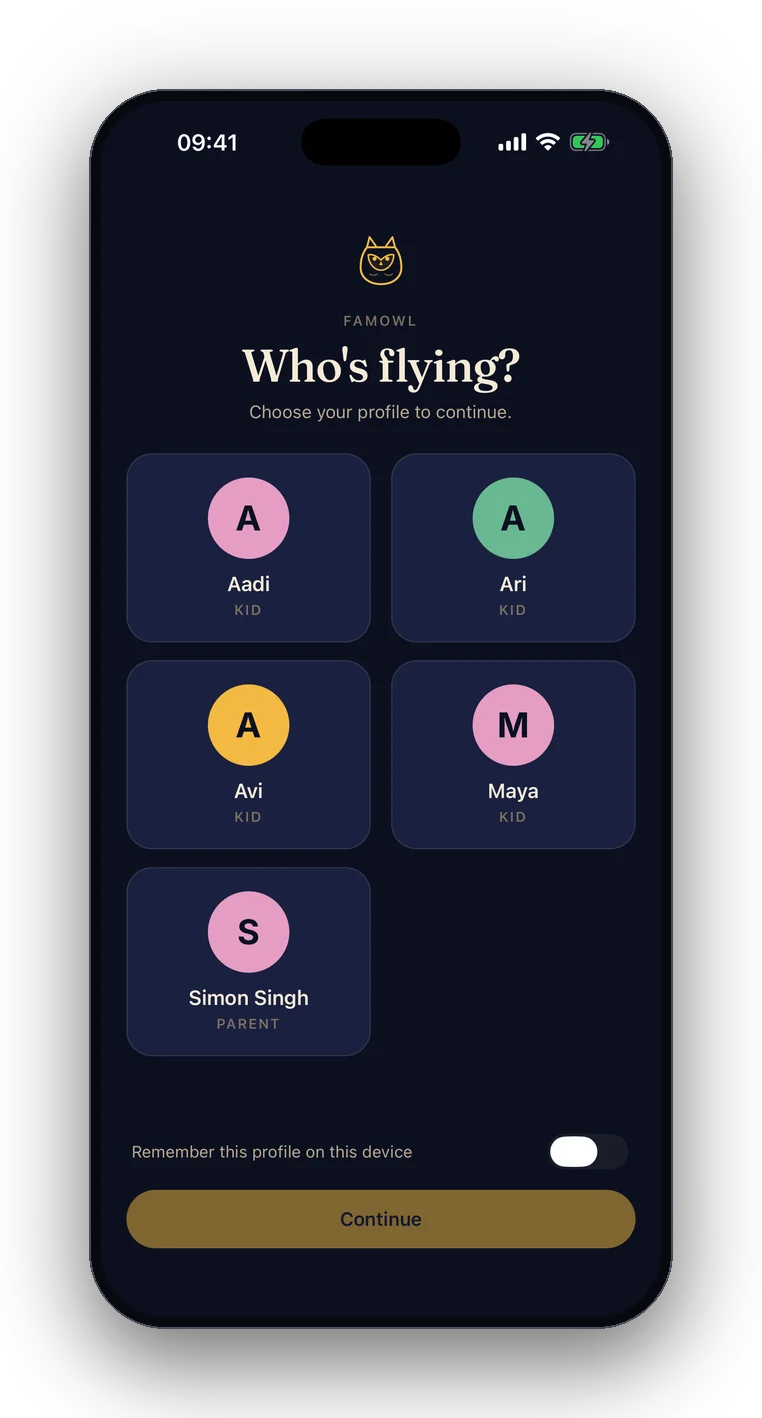
This is exactly what FamOwl is for. Set missions pitched to each kid's age, attach the points, and let the levelling-up happen in the open — photo proof included, nagging not. Free on the App Store, with unlimited missions for up to three kids.
Get FamOwl freeSome FamOwl articles are drafted with AI assistance and reviewed by our team. They're general information, not professional, financial, or medical advice — every family is different, so use your own judgement. FamOwl isn't liable for decisions made based on this content.