
How to get kids to do chores without nagging

Here's the reframe that changed how I run my own house: nagging is a system failure, not a parenting failure. If a job only happens when you remind someone, the reminder is the system — and you are the single point of failure. You're not raising a kid who does chores; you're raising a kid who responds to prompts, and burning yourself out as the prompt.
The fix isn't a better tone of voice. It's replacing yourself with a system that does the reminding, tracking, and rewarding. Five parts.
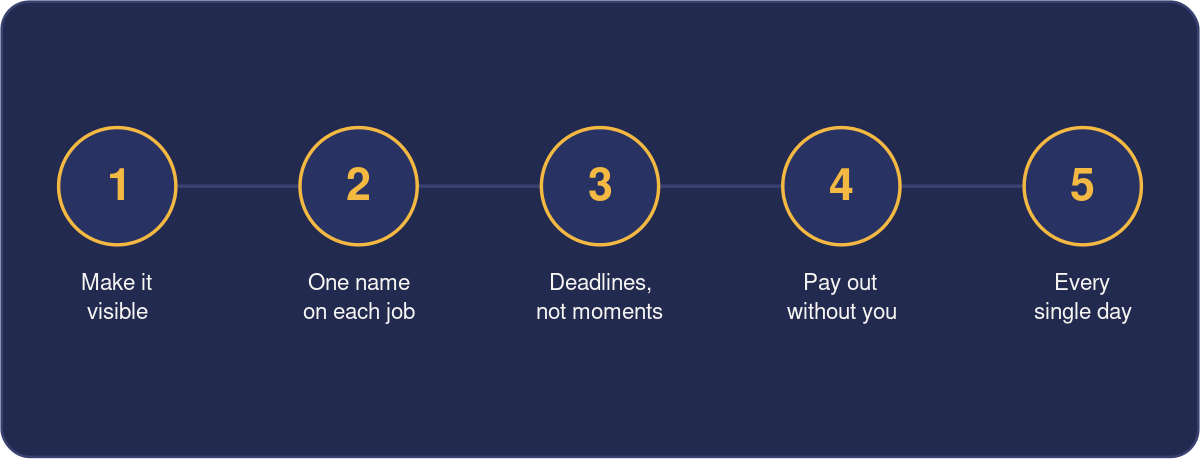
1. Make the work visible — somewhere that isn't your mouth
Every reminder you speak is information that should have been ambient. Kids genuinely don't hold the household's task list in their heads (most adults don't either — that's why we have calendars). The job list needs to live somewhere a kid checks on their own: a chart on the fridge, or a device they already stare at.
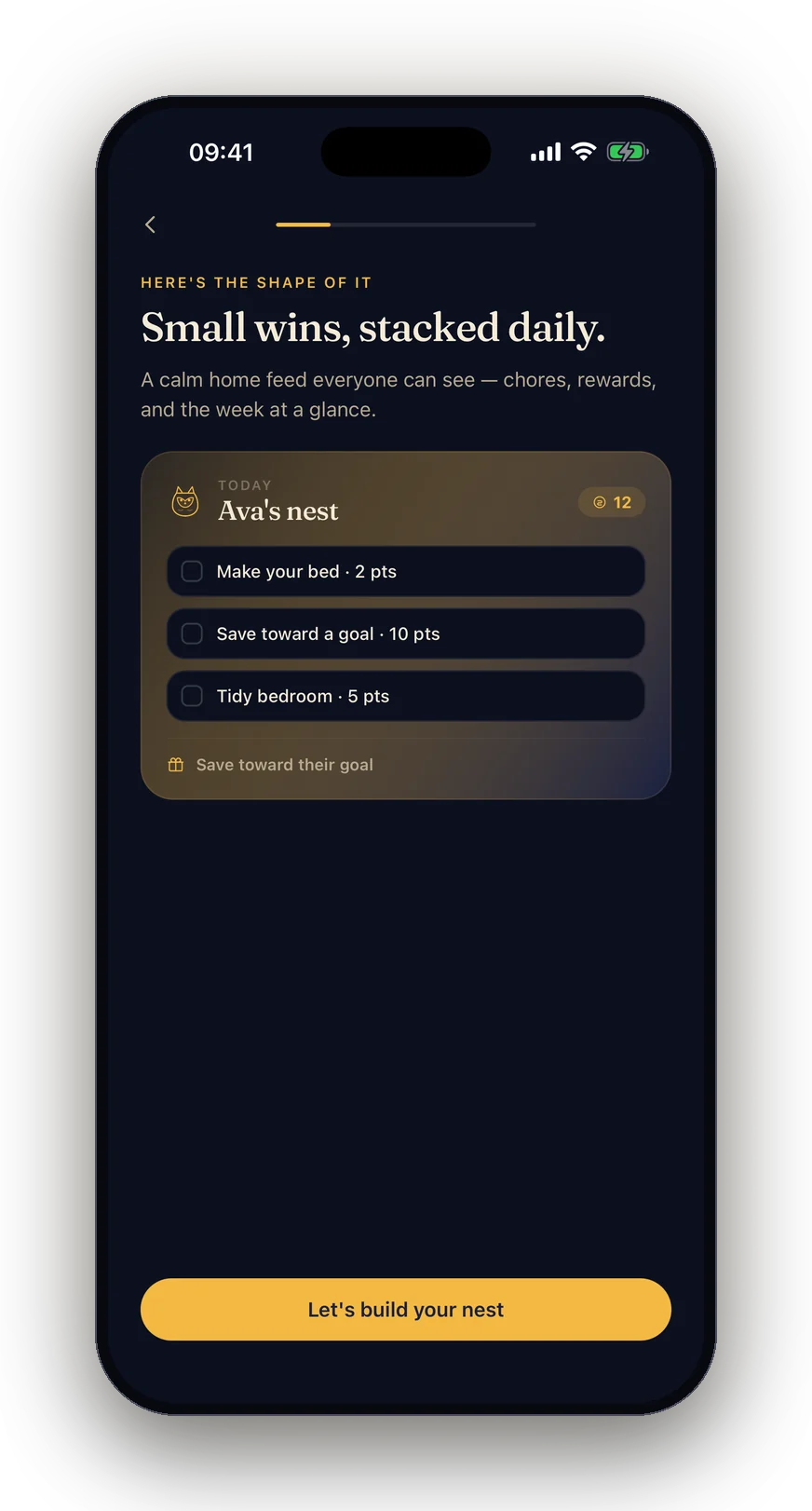
The test: could your kid answer "what do I still have to do today?" without asking you? If not, the system isn't visible enough — and every "did you make your bed?" is you doing the system's job.
2. Make ownership unambiguous
"Someone needs to feed the dog" guarantees a standoff between siblings. Every job needs exactly one name on it. Shared jobs become rotations ("bins: Ari on even weeks, Maya on odd"), not negotiations. Ambiguity is where chores go to die, and where every sibling-fairness fight starts.
3. Deadlines, not moments
"Do it now" starts a power struggle — you've made the chore a test of who's in charge. "Before dinner" hands over a small, real piece of autonomy: when is theirs, whether is not. Kids fight the first kind and mostly accept the second. Tie deadlines to fixed daily anchors (before school, before dinner, before screens go on) rather than clock times; anchors don't need a watch.
4. Consequences that pay out without you
This is where most systems quietly collapse: the chart is on the fridge but the payoff still routes through a parent's mood and memory. If finishing chores sometimes earns a reward, depending on whether anyone remembered, kids correctly learn that the chart is theatre.
What works is a standing exchange rate: missions are worth points, points buy things kids actually want — screen time, pocket money, the Saturday sleepover. Done is rewarded every time, automatically, at the agreed rate. Not done means the points simply don't arrive. No lecture required; the system delivers the consequence, so you don't have to be the villain.
5. Consistency beats intensity
A mediocre system run every single day outperforms a brilliant one run for nine days and abandoned. (Every parent has built that laminated chart. We've all watched it die.) Two habits keep a system alive:
- A fixed review moment. Approvals and payouts happen at the same time daily — after dinner works for most families. Thirty seconds, but it's the heartbeat.
- Never pay for un-done work, never skip paying for done work. The first breaks the meaning, the second breaks the trust. Both break the system.
The two-week dip (expect it)
Any new system gets a novelty bounce, then a dip around week two when the shine wears off. The dip is where paper charts die and parents conclude "rewards don't work for my kid". Push through with three moves: keep the review moment sacred, refresh one reward (kid boredom is usually reward boredom, not chore boredom), and add one "save up for it" goal big enough to pull motivation across the boring middle. Systems that survive week three tend to survive the year.
What this looks like with the nagging removed
Morning: kid checks their list — two missions before school. Afternoon: feeds the dog, snaps a photo, marks it done. Evening: you approve the day's work from the couch in thirty seconds; points land; she's 40 away from the movie night she's been saving for. Nobody said "have you done your jobs?" even once.
That's not a fantasy kid. That's an ordinary kid inside a system that doesn't need you as its engine.
FamOwl is this system in app form — visible missions per kid, one name on every job, deadlines, photo proof, and points that pay out into rewards you set. Free for unlimited missions, up to three kids.
Get FamOwl freeSome FamOwl articles are drafted with AI assistance and reviewed by our team. They're general information, not professional, financial, or medical advice — every family is different, so use your own judgement. FamOwl isn't liable for decisions made based on this content.